The Research Behind Our Books

Why Personalized Stories Actually Work

We didn’t invent these ideas. We built on decades of research from Harvard, the NIH, and leading child development labs. Here’s what the science says — in plain language.

Neuroplasticity

Your child’s brain is building itself right now

Between birth and age five, your child’s brain forms over one million new neural connections every single second. That’s not a metaphor — it’s biology. This period of rapid growth is called neuroplasticity, and it’s the reason early experiences matter so much.

Think of neural pathways like trails in a forest. The more a trail gets walked, the wider and easier it becomes to travel. Every time your child hears a story, recognizes a pattern, or feels an emotion tied to a character — those specific pathways get strengthened. The trails they walk most often in these early years become the highways their brain uses for the rest of their life.

Harvard’s Center on the Developing Child puts it simply: “Brains are built over time, and the foundation is the most important part.” The stories, conversations, and interactions your child has right now are literally shaping their brain’s architecture — how they learn, how they regulate emotions, and how they connect with others.

This is why we design books for specific developmental windows. A 2-year-old needs repetition and sensory engagement. A 4-year-old needs narrative structure and identity exploration. The right kind of story at the right time doesn’t just entertain — it builds the brain.


Self-Reference Effect

Why children remember stories about themselves

In 1977, psychologists Rogers, Kuiper, and Kirker discovered something that changed how we think about memory. They found that people remember information significantly better when it relates to themselves — compared to information that’s equally interesting but about someone else. They called it the Self-Reference Effect.

Here’s what that means for your child: when they open a book and see their own name, their own face, their own family — their brain doesn’t process it like fiction. It processes it like a memory of themselves. The story gets filed in the same place the brain stores personal experiences, which is the deepest and most durable kind of memory we have.

This is why our personalized books get re-read 12+ times on average. Your child isn’t just reading a fun story. They’re encoding lessons about kindness, courage, and problem-solving as things they actually did. The learning doesn’t feel like learning — it feels like remembering.


Identity & Confidence

Seeing yourself in a story changes how you see yourself

Developmental psychologists have long studied what they call the mirror effect — the idea that children build their sense of self partly through what they see reflected back at them. When a child sees characters who look like them, share their name, celebrate their festivals, and live in a world they recognize — it sends a powerful message: you belong here. You matter.

Research from the Collaborative for Academic, Social, and Emotional Learning (CASEL) shows that children with a strong sense of identity demonstrate higher self-confidence, better emotional regulation, and stronger social skills. They’re more willing to try new things, more resilient when things go wrong, and more empathetic toward others.

For children growing up across cultures — maybe speaking one language at home and another at school, celebrating different holidays than their classmates — this representation is especially powerful. When your child sees their heritage validated in a beautiful, professional book, it doesn’t just make them smile. It builds the neural foundation for confidence and self-worth that carries into adulthood.


Serve & Return

Reading together is brain-building, not just bonding

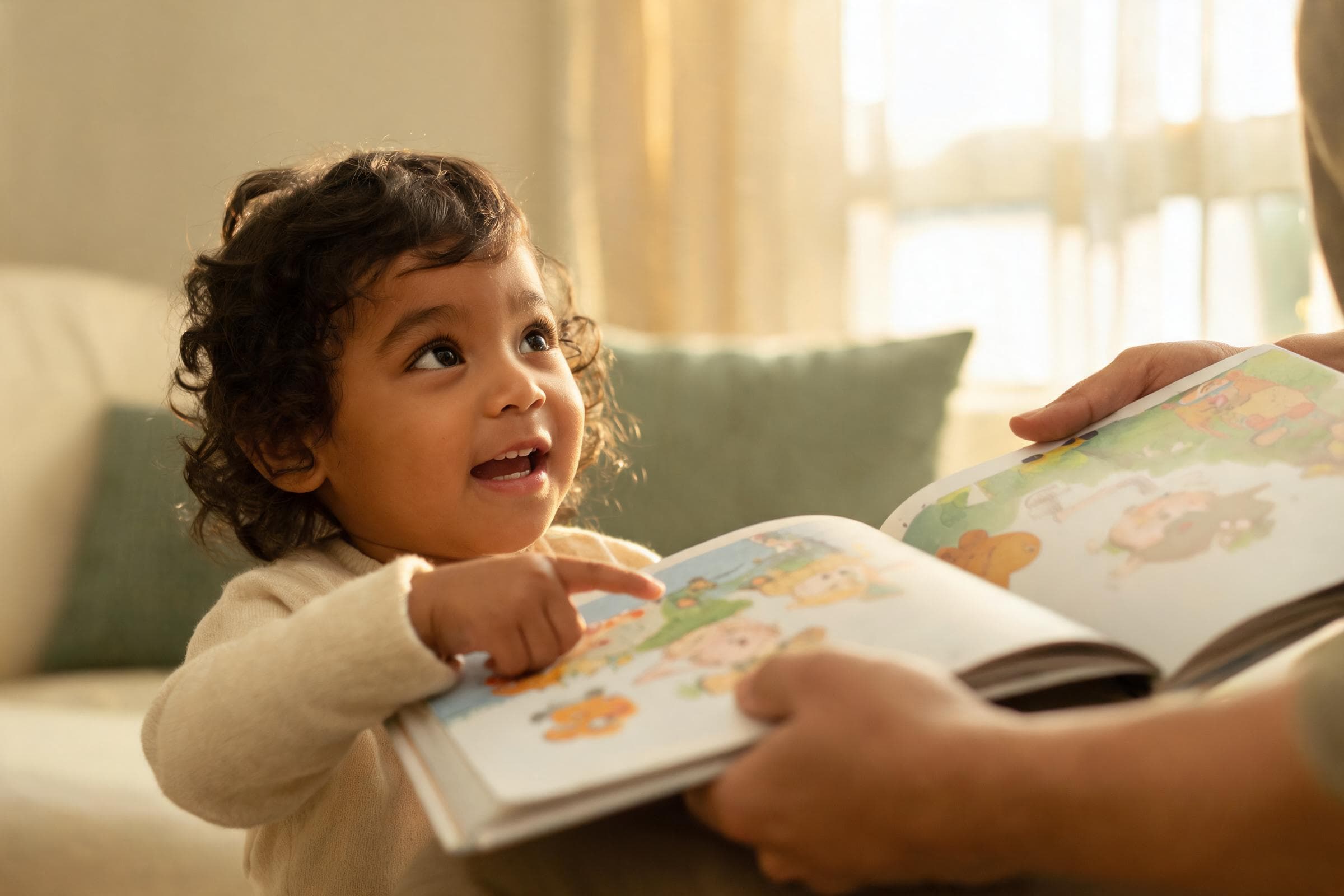
Harvard’s Center on the Developing Child identifies serve-and-return interactions as one of the most important experiences in early childhood. Here’s how it works: a child “serves” by babbling, pointing, or asking a question. An adult “returns” by responding — answering, expanding, making eye contact. This back-and-forth is how the brain builds its communication and reasoning circuits.

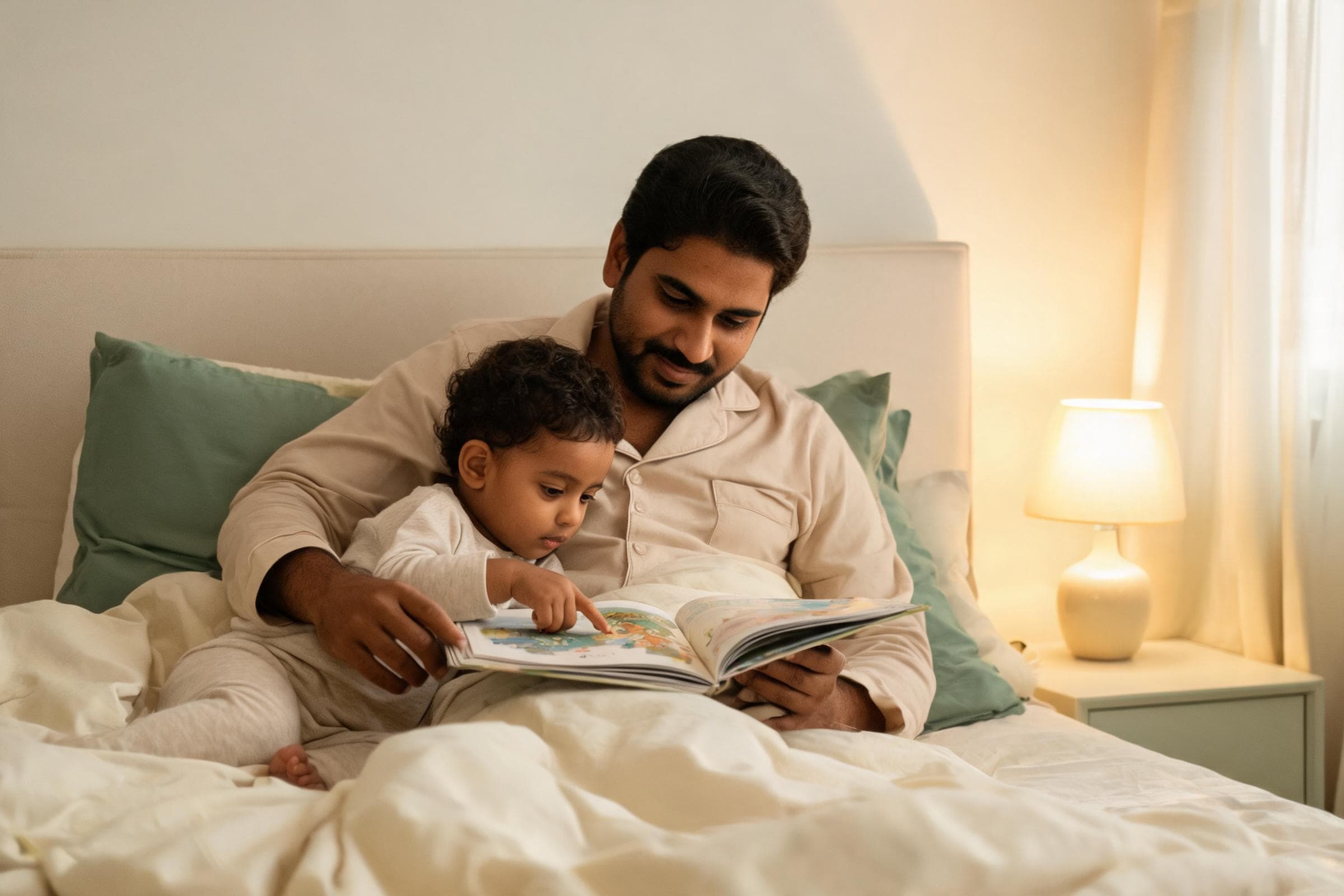
Shared reading is one of the richest serve-and-return environments that exists. Your child points at a picture — you name it. They ask “why is she sad?” — you explore the emotion together. They recognize themselves on the page — and suddenly the conversation becomes personal, meaningful, and deeply engaging.

Cunningham and Zibulsky (2014) found that shared reading is the single strongest predictor of early literacy, outweighing socioeconomic factors, preschool attendance, and even IQ. The key isn’t just reading to your child — it’s reading with them, in a way that sparks conversation. Personalized stories make that happen naturally.


Repetition + Emotion

Why “read it again!” is actually a good sign

Every parent knows the drill: your child wants the same book, every single night. It can feel monotonous, but neuroscientists say it’s one of the best things that can happen.

Repetition is how the brain strengthens neural pathways. Research on spaced repetition (Cepeda et al., 2006) shows that revisiting material over time — especially in an emotionally engaging context — dramatically improves long-term memory. Each re-read isn’t just going over the same ground. The brain is consolidating: turning short-term exposure into durable knowledge, turning storylines into behavioral patterns.

But here’s the catch — repetition only works when the child wants to repeat. Force a boring flashcard and they disengage. Give them a story where they’re the hero, and they’ll ask for it themselves. That voluntary repetition — driven by excitement rather than obligation — is the most powerful kind of learning there is.


Active Learning

The opposite of screen time

There’s a fundamental difference between passive consumption and active learning. Screens are designed to hold attention — rapid cuts, bright colors, auto-playing content. The child watches, but their brain is in receive-only mode. Research by Chi and Wylie (2014) calls this the difference between passive, active, constructive, and interactive learning. The higher up that scale you go, the deeper the learning.

A personalized story operates at the interactive level — the highest. Your child isn’t just listening. They’re pointing at themselves on the page. They’re asking questions. They’re acting out scenes the next day. They’re connecting the story to their own life. That level of engagement creates learning that transfers — it shows up in their behavior, their vocabulary, and their understanding of the world.

No notifications. No algorithms. No dopamine loops. Just a parent, a child, and a story that becomes part of who they are.

Ready to see the difference?

Start with one story. Watch how your child responds.